It's Never Too Late: What a New UCL Study Says About Getting Healthier After 50 👵💪
Here's a sentence that really grinds my gears, and one I hear far too often...
"I'm too old to start."
Too old for weights.
Too old for the gym.
Too old to change...
So when a brand new study landed from University College London this week, I got a bit giddy, because it reinforces my purpose every day here at Fit Club, Nutfield.
_____
The research: what did UCL actually do?
Researchers at the UCL Centre for Longitudinal Studies used data from the 1958 National Child Development Study. That's more than 6,000 people, all born in Britain during the same week in 1958, who have been followed for decades.
They looked at everyone's BMI from their 20s onwards and found the highest weight each person reached by age 42
They checked who had lost or gained at least 5% of their body weight by age 50
They then checked who had kept that change up by age 55
Finally, they compared heart and metabolic health at age 44 and age 62. That meant blood pressure, cholesterol, triglycerides (fats in the blood) and a blood marker for inflammation
Then they compared everyone to people who had been a healthy weight for pretty much their whole adult life.
______
What did they find?
Overweight adults who lost at least 5% of their weight in their early to mid-50s, and kept it off, had similar heart health at 62 to people who had stayed a healthy weight their whole adult lives.
Cholesterol, blood pressure, inflammation. All comparable.
Read that again. 😮
What 5% actually looks like
This is where people breathe out. 5% is not a huge amount.
100kg person: that's 5kg
80kg person: that's 4kg
70kg person: that's 3.5kg
A few more headline numbers:
Around 24% of people had a healthy BMI for almost all of adulthood
About 6% lost at least 5% of their body weight by 50 and kept it off to 55
Over a third gained weight by their mid-50s, and this group's heart health declined the fastest by 62
People whose weight went up and down a lot within the obesity range also had poorer outcomes
The lead researcher, Dr Charis Bridger Staatz, said:
"Ageing is often framed as inevitable health decline, but this research shows it doesn't have to be that way"
An honest bit of small print
It's an observational study. So it doesn't prove weight loss causes better heart health. What it does show though, is that there is a strong link, and a really encouraging one, and also worth knowing: it's about keeping weight off - Not yo-yoing!
_____
So what does this mean for YOU?
Here's how I'd take it from "interesting science" to "right, what do I do on Monday?"
1. Start exactly where you are
You don't need to be fit to start. Starting is what makes you fit.
2. Make 5% your first target, not "everything"
Don't try to fix your entire life at once. That's how people give up by Thursday.
Pick one achievable goal. Five percent of your body weight is a brilliant one. It's small enough to feel doable and big enough to matter. The rest snowballs from there.
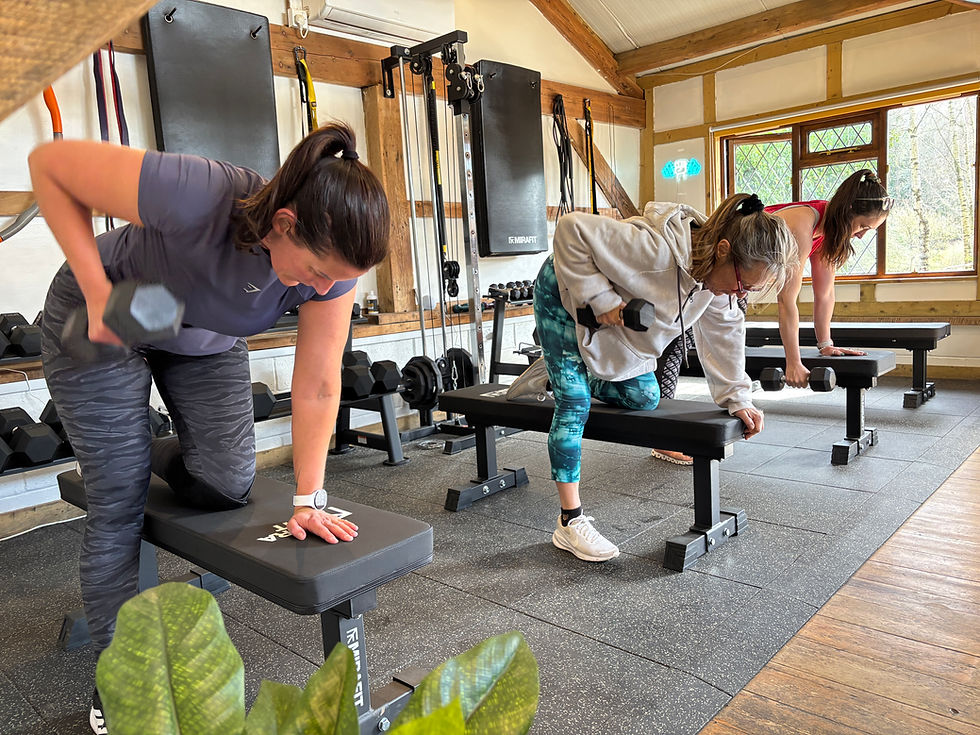
3. Get stronger by lifting weights.
Strength training is non-negotiable in this stage of life, and it's so much more accessible than people think.
Start with the basics: squats (to a chair if you need), pushing, pulling, carrying
Go light, learn the moves, build up slowly
Two or three sessions a week is plenty to begin with
You can ease into it. Nobody's asking you to deadlift a car on Day 1. Leave that for a few weeks at least 😉
4. Make your eating habits sustainable
No extremes. No "cut out everything you love". Just a couple of tweaks you can actually stick with for the long haul.
Add protein to your meals (it helps you feel full and supports your strength training)
Keep an eye on the snacking that sneaks in without you noticing
Aim for "good enough, most of the time", not perfect
Consistency beats intensity every time.
5. Add some cardio you actually enjoy
Notice the word enjoy. Walk, swim, play sport, dance in the kitchen, join a run club. If you hate it, you won't do it. If you like it, it stops feeling like a chore and you've got way more chance of keeping it going long term.
6. Fake it till you make it
This one's from my podcast co-host Katie, and I love it. She says:
"self-belief doesn't arrive one morning and slap you in the face. It's built through actions. So in the early days, act like the person you want to become"
Try the "I am someone who…" trick:
"I am someone who does an early start."
"I am someone who gets their steps in."
"I am someone who doesn't take their foot off the gas at the end of the year."
Finish the sentence yourself. Next time you're trying to talk yourself out of the session, shut that chat down and say your sentence instead.
7. Put yourself in a room with people on the same mission
Honestly, one of the best things you can do.
A lot of us have had our belief knocked out of us. It might have been a PE teacher, a parent, or just decades of "that's not for people like me". If nobody around you is doing it, it's hard to believe you can, but when you see someone your age doing something you thought you couldn't? Something clicks. Go find these people asap.
8. Don't wait
Not for the new year. Not for after Christmas. And definitely not for a health scare.
Katie and I both see it all the time. Someone gets a bad diagnosis or a fright, then decides to change. Don't wait for that. Start now. Your 50s and beyond can actually be a great time for it. The kids are more independent, work is often more settled, and you might finally have a bit of time and headspace for yourself.
_____
Not sure where to start? Come and try it for free. 💪
At Fit Club Nutfield, we help adults of all ages to get stronger, fitter and more confident, without the intimidation of a traditional gym. Our sessions run in a converted barn at Priory Farm, Nutfield, Surrey, and it's friendly, fun and full of people who started exactly where you are.
Prefer to start at home? We've got a growing online library of workouts you can do in your living room, in your own time. Either way, we'll meet you where you are. Any age. Any starting point. No judgement. That's a promise!
And if you haven't yet, give this weeks VOFR podcast a listen here:
Bottom Line:
You're not too old. You're not too late. You just haven't started yet.
Let's change that.
See you in the barn,
Frank Sinclair
Fit Club Founder / Over 50's Cheerleader
_______
Source: UCL Centre for Longitudinal Studies, "Losing a little weight in midlife may help later heart health" (21 October 2026), based on the briefing paper "Weight loss and positive ageing: Initial findings from the 1958 National Child Development Study at Age 62" by Dr Charis Bridger Staatz, Dr Laura Gimeno and Professor George Ploubidis. This post is for general information and isn't medical advice. If you have a health condition or take medication, check with your GP before starting a new exercise or eating plan.